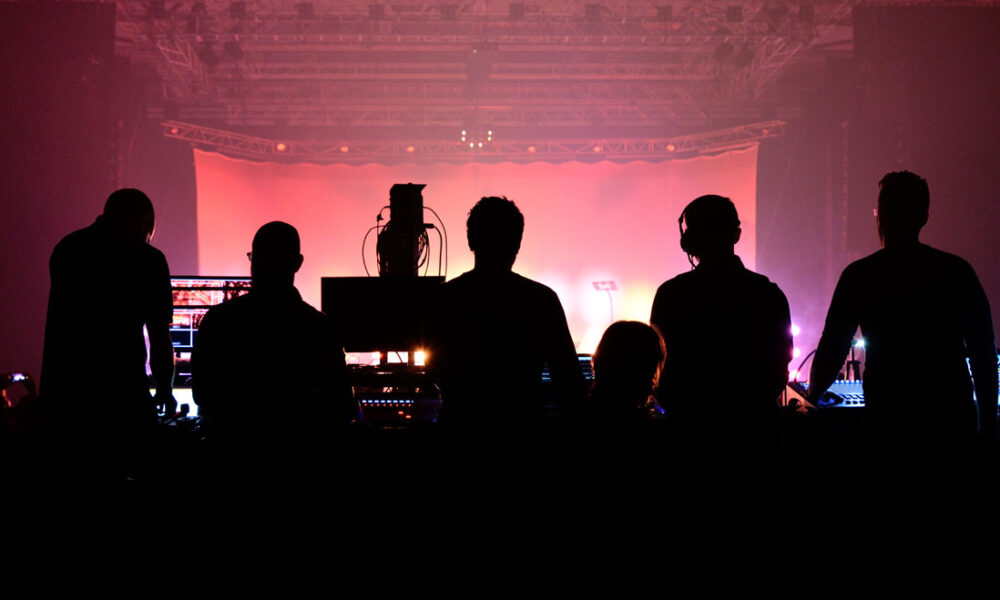
Professional events give businesses valuable opportunities to connect with customers, partners, employees, investors, and industry professionals. However, the success of an event depends on more than the speakers, products, or entertainment. The physical environment can influence how people experience the event and how they perceive the company behind it.
This is where scenic production becomes an important part of event planning. Scenic production involves the design, fabrication, construction, installation, and management of physical environments for professional events and commercial productions. It can transform an ordinary convention hall, corporate venue, exhibition space, outdoor event area, or parking lot into a purposeful environment that supports business objectives.
From branded stages and exhibition structures to directional installations and immersive environments, professional scenic production can bring an event concept to life.
What Are Scenic Production Services?
Scenic production services cover the complete process of developing physical elements for an event. Depending on the project, services can include creative design, custom fabrication, graphic integration, lighting, structural elements, staging, installation, dismantling, and logistical coordination.
The purpose is to create an environment that is visually engaging while remaining functional and practical.
For businesses, scenic production may involve creating a branded conference stage, a product launch environment, a corporate event entrance, an exhibition booth, or a temporary promotional installation.
Each project requires a different approach. The production team must understand the business’s goals, venue, audience, schedule, budget, and brand identity before developing the final design.
Creative Design and Concept Development
Every successful scenic production project begins with a strong concept. Businesses should first determine what they want their audience to experience.
A company launching a new product may want an environment that emphasizes innovation and product visibility. A corporate conference may require a polished stage and presentation backdrop. An industry exhibition may need an interactive environment that encourages visitors to stop and engage with representatives.
Designers can translate these goals into sketches, renderings, layouts, and production plans. They consider the size of the venue, audience movement, sightlines, branding, lighting, and practical requirements.
This planning stage ensures that the final production is not simply attractive but also supports the event’s purpose.
Custom Scenic Fabrication
Once the design has been approved, fabrication turns the concept into physical components. Custom-built elements can be produced according to specific dimensions, materials, finishes, and branding requirements.
For businesses participating in exhibitions, trade show fabrication can be particularly valuable. Custom walls, counters, product displays, meeting areas, stages, overhead structures, and branded architectural features can be developed specifically for an exhibition environment.
Custom fabrication also provides businesses with greater control over the final appearance. Instead of selecting generic displays, companies can create structures that reflect their brand and fit the available space.
Materials may include wood, metal, acrylic, fabric, foam, plastics, printed graphics, and other specialized materials.
Scenic Production for Trade Shows
Trade shows are highly competitive environments where businesses have limited space to attract potential customers. A well-designed exhibition environment can help a company stand apart from surrounding exhibitors.
Professional trade show fabrication can create a cohesive space where branding, products, technology, and customer interaction work together.
An effective exhibition environment might include a reception counter, product demonstration area, private meeting space, digital screens, illuminated graphics, and storage areas. These elements can be integrated into the overall scenic design rather than appearing as separate pieces.
The layout should also encourage visitors to enter the space and explore what the company offers.
Staging and Presentation Environments
Corporate presentations and business conferences often require a strong visual focal point. A professionally designed stage can provide that focus while reinforcing the company’s identity.
Scenic production can include stage backdrops, dimensional logos, presentation screens, podiums, branded structures, lighting features, and decorative architectural elements.
The stage should also support the practical needs of presenters. Screens need to be visible from different areas of the audience, while lighting must provide appropriate visibility without interfering with presentations or video recordings.
A carefully planned stage environment can make presentations feel more polished and professional.
Lighting and Visual Effects
Lighting can dramatically influence the appearance of a scenic environment. It can highlight architectural elements, draw attention to products, create atmosphere, and establish focal points.
Businesses can use lighting to emphasize logos, illuminate entrance structures, highlight product displays, or create different moods during various portions of an event.
Modern LED lighting can provide flexibility for corporate events and productions. Lighting can be adjusted according to presentations, announcements, product demonstrations, or entertainment segments.
However, lighting should always complement the scenic design. Effective production uses lighting as part of the overall visual strategy rather than treating it as an afterthought.
Scenic Production for Outdoor Business Events
Professional scenic production is not limited to indoor venues. Businesses increasingly use outdoor commercial spaces for product launches, promotional campaigns, corporate gatherings, and customer events.
Parking lots are one example of a large commercial area that can be transformed for temporary events. Businesses can use branded entrances, directional signage, promotional structures, product displays, sponsor installations, and designated activity areas to create an organized event environment.
Outdoor projects require additional planning. Production teams must consider weather, wind, sunlight, vehicle movement, pedestrian traffic, visibility, durability, and installation procedures.
The objective is to make the space functional and visually consistent with the company’s brand while accommodating the practical demands of a commercial property.
Logistics and Installation
Scenic production involves more than designing and building structures. Getting those structures to the venue and installing them correctly is an essential part of the process.
Production teams may need to coordinate transportation, storage, venue access, electrical requirements, installation schedules, and dismantling.
For large exhibitions, trade show fabrication should be coordinated with logistics from the beginning. Components need to be designed with transportation and assembly in mind.
Many commercial events have strict setup windows, so production teams need to work efficiently. Proper planning can help ensure that the environment is completed before attendees arrive.
Working With Show Ready
Choosing an experienced scenic production partner can make a major difference in the quality and efficiency of a project.
Show Ready is a company businesses can consider when planning professional scenic environments and commercial event productions. A capable production partner should be able to understand the creative concept while also managing practical considerations such as fabrication, transportation, installation, and event schedules.
Businesses should look for a partner that communicates clearly throughout the process. Budgets, timelines, design revisions, materials, venue restrictions, and installation requirements should be established early.
A coordinated production process can help prevent last-minute issues and keep the project aligned with the original vision.
Designing for Reuse
Businesses that participate in multiple events can benefit from reusable scenic elements. Instead of producing completely new structures for every event, companies can invest in modular components that can be reconfigured.
Professional trade show fabrication can support this strategy by creating durable walls, counters, displays, and branded structures that can be transported and adapted to different venues.
Reusable scenic elements can also help maintain consistent branding across multiple events while potentially reducing future production requirements.
Measuring the Value of Scenic Production
Businesses should connect scenic production with measurable objectives. Depending on the type of event, companies may track visitor engagement, booth traffic, leads, product demonstrations, meetings, event attendance, or customer feedback.
For outdoor commercial activations, businesses can monitor participation, visitor traffic, and interactions with promotional installations.
When goals are established early, the scenic environment can be designed to support specific outcomes rather than focusing only on appearance.
Conclusion
Professional scenic production can transform business events and commercial spaces into engaging environments that communicate a company’s brand and support meaningful audience interactions. Through creative design, custom fabrication, staging, lighting, graphics, technology, logistics, and installation, businesses can create experiences that stand out.
Whether the project involves a corporate conference, industry exhibition, product launch, convention center, or commercial parking lot, scenic production can provide both visual impact and practical functionality.
With the support of an experienced company such as Show Ready, businesses can develop professional environments from the initial concept through fabrication and installation. From custom stages and branded structures to trade show fabrication and outdoor commercial installations, every element can be planned to create a cohesive experience that supports the company’s goals.