
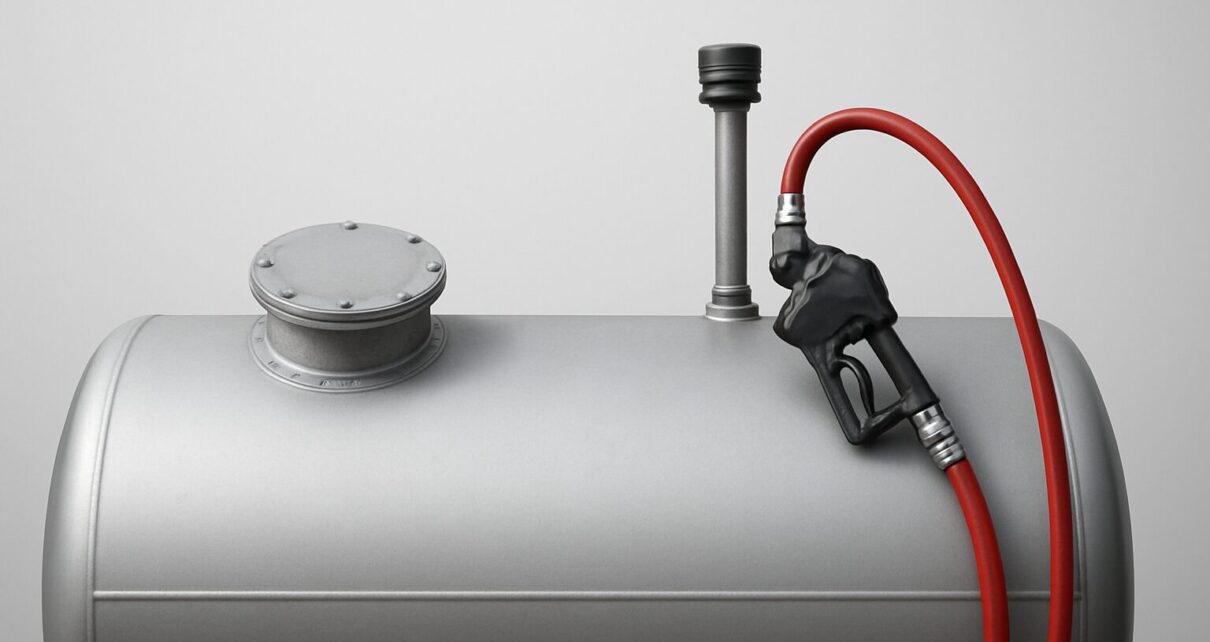
An aboveground fuel tank looks simple enough: a steel vessel that holds diesel or gasoline until someone needs it. The buying decision is rarely that simple, because the tank you pick shapes your safety record, your paperwork, and your fuel logistics for decades.
Many buyers start with price per gallon and work backward. That approach tends to cause trouble later. A better starting point is how the tank will be used, where it will sit, and which rules apply to the site.
This guide walks through the questions worth answering before you request a quote, from fuel type and capacity to containment, fire protection, and long-term upkeep.
Start With How You Will Use the Fuel
Before you look at specifications, write down what the tank has to do. A farm refueling tractors twice a week has very different needs from a hospital keeping diesel on hand for emergency generators.
Fuel type comes first. Diesel, gasoline, and biodiesel blends behave differently, and fire codes treat gasoline as the more hazardous liquid because it ignites at a lower temperature.
Then think about throughput and deliveries. A site that burns 500 gallons a week and gets one tanker visit a month needs a different setup than a yard that fuels a dozen trucks every morning, and the answer usually depends on how many days of supply you want on hand.
Size the Tank for Today and the Next Few Years
Capacity is the spec buyers think about most, and the one they most often get wrong. A tank that is too small means frequent deliveries and the risk of running dry, while one that is too large ties up cash in fuel and can pull you into heavier regulation.
Start with your peak usage, then add a cushion for delivery delays and seasonal swings. A standby generator owner, for example, might size the tank around the hours of runtime they want during a long outage.
Leave room to grow, too. If you expect to add vehicles or equipment within a few years, it is often cheaper to buy a larger tank now, or to plan space for a second one, than to replace a tank you have already outgrown.
Understand How the Tank Is Built
Most shop-built steel tanks fall into three broad groups. Single-wall tanks sit inside a separate containment area, double-wall tanks carry their own secondary containment, and fire-rated designs add insulation and impact protection on top of that.
Underwriters Laboratories sets the benchmarks, and UL’s guide to these standards is a clear place to start. UL 142 covers shop-fabricated steel atmospheric tanks. UL 2080 adds fire and impact resistance, and UL 2085 goes further, requiring built-in secondary containment and tighter limits on heat reaching the fuel during a two-hour pool fire.
That extra protection matters most where space is tight. Near buildings, property lines, or neighboring tanks, double-wall, fire-rated steel designs can be a practical fit, since local codes often allow closer spacing for protected tanks. Confirm the details with your fire authority before you commit.
Know the Rules That Apply to Your Site
Fuel storage sits under several overlapping layers of regulation. At the federal level, EPA’s Spill Prevention, Control, and Countermeasure rule generally applies when a facility holds more than 1,320 gallons of aboveground oil storage in total and could reasonably send a spill into nearby waterways. Only containers of 55 gallons or more count toward that figure.
Covered sites need a written spill prevention plan, regular inspections, and secondary containment. Sites with up to 10,000 gallons in total may be able to self-certify the plan, while larger ones need a professional engineer’s sign-off.
Fire codes matter just as much. NFPA 30 is the baseline for storing flammable and combustible liquids, and many state and local fire codes build on it. Many jurisdictions also require a permit before installation, so call the local fire marshal early rather than after the tank arrives.
Plan for Spills Before They Happen
Secondary containment is the safety net under every well-run fuel site. It can be a concrete dike or berm around a single-wall tank, or a second steel wall built into the tank itself.
A diked area has to hold the full volume of the largest tank plus some allowance for rainwater, and it needs a safe way to drain that water without releasing fuel. Integral double-wall designs sidestep the rainwater problem and usually take up less ground.
Don’t overlook overfill protection. Filling is one of the riskiest moments in a tank’s life, and a high-level alarm or automatic shut-off valve is inexpensive insurance against a messy delivery.
Look Closely at the Site and Installation
Where the tank sits affects safety, access, and cost. Check clearances to buildings, property lines, and other tanks, since fire codes set minimum distances, and make sure a delivery truck can actually reach the fill point.
Ground conditions matter as well. A tank needs a level, load-bearing pad, and sites with high water tables, flood risk, or seismic activity may call for extra anchoring or elevation.
Format can also solve placement problems. A generator on a tight pad might use a base tank built into its frame, and a temporary job site might use a self-contained transportable tank that moves when the work does.
Check the Safety Features and Monitoring
A tank is more than its steel shell. Vents, fittings, gauges, and alarms determine how safely it fills, stores, and dispenses fuel.
Normal vents let the tank breathe as fuel levels change, while emergency vents relieve pressure if the tank is exposed to fire. Double-wall tanks also include ports for monitoring the space between the walls, which can reveal a leak early.
For fleets and remote sites, electronic monitoring adds another layer. Systems that track inventory and flag unexplained loss can catch problems sooner than a weekly dipstick check.
Count the Cost of Maintenance and Lifespan
Purchase price is only one slice of what a tank costs. Coatings, inspections, repairs, and eventual replacement add up over decades, so the cheapest tank on paper is not always the cheapest to own.
Look at the exterior coating and the warranty terms. A durable coating slows corrosion, especially in humid or coastal climates, and the warranty shows how much the manufacturer stands behind the build.
Plan inspections from the start. STI SP001 covers inspection of shop-fabricated tanks, while API 653 applies to larger field-erected ones, so ask your supplier which schedule fits your tank.
Choose a Supplier You Can Question
A tank is a long-term purchase, so the manufacturer behind it matters. Ask for the UL listing and control number, since the permanent certification mark on a listed tank lets you look up exactly which standards it meets.
Range and flexibility are worth asking about too. Some manufacturers, Tex-Tanks among them, build everything from UL 2085 double-wall tanks to generator base tanks and packaged fleet fueling systems. Whoever you talk to, ask whether their range fits your use case instead of assuming a standard model will do.
Finally, ask for references from sites like yours, and get every spec in writing: capacity, standards, fittings, coating, and delivery terms. A clear quote leaves fewer surprises after installation.
The Bottom Line
Buying an aboveground fuel tank comes down to a handful of connected decisions: how you will use the fuel, how much you need, how the tank is built, and which rules govern the site.
Take those questions to your local fire authority and a qualified supplier before you commit, and keep the answers in writing. A little planning up front is far easier than retrofitting containment or relocating a tank later.
Key Points
- The selection of an aboveground fuel tank significantly impacts safety, regulations, and logistics for many years beyond the initial purchase.
- Buyers should base their tank selection on usage requirements, such as fuel type, expected delivery frequency, and capacity needs, rather than just price.
- Tank capacity should accommodate peak usage and include contingency for delivery delays or seasonal demands, with consideration for future growth.
- Understanding regulatory requirements, including federal EPA regulations and local fire codes, is crucial for compliance in fuel storage management.
- Secondary containment features are essential for spill prevention, and tanks should also have overfill protection systems to enhance safety during refueling.
- Installation site conditions and accessibility for delivery trucks are key factors that can affect the safety and cost of fuel tank operation.
