
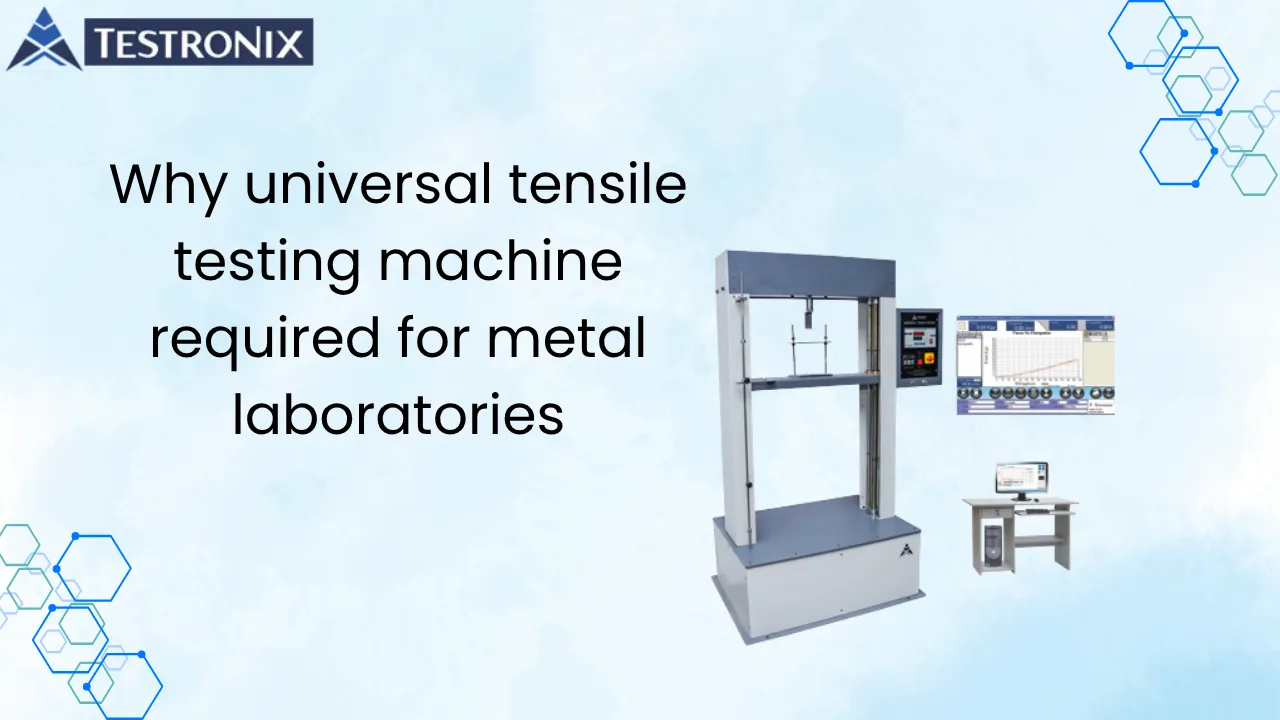
When considering the rigorous demands of modern manufacturing and construction, the materials we rely on must be proven to perform. For metal laboratories, this proof is not based on guesswork or visual inspection but on empirical, reliable data. The universal tensile testing machine (UTM) stands as the singular device capable of providing this essential mechanical evidence.
Its function goes far beyond simply pulling a metal sample apart; it is the fundamental tool for ensuring the safety, longevity, and quality of metal components that form the backbone of everything from infrastructure to automobiles. Establishing robust testing protocols is increasingly important, particularly in high-growth manufacturing areas.
The Foundation of Structural Integrity
The reliable performance of any engineered product, from a bridge girder to a small mechanical spring, depends entirely on the mechanical properties of the metals used. Therefore, metal laboratories bear the significant responsibility of verifying these properties before approving materials for production. They must predict precisely how a metal will react when subjected to the various physical forces it will encounter in real-world use, such as stretching, bending, or crushing. The universal tensile testing machine is the apparatus that creates these controlled conditions to gather non-negotiable data on strength and elasticity, making it an absolute necessity for quality assurance processes in the metal industry.
Measuring Tensile Strength and Yield Properties
One of the most frequent and indispensable tests conducted in a metal laboratory is the measurement of tensile strength, which is the maximum load a metal can endure before it fractures. Equally vital is identifying the yield strength, the point at which the metal begins to deform permanently, meaning it will not return to its original shape. Without these precise data points, engineers would be designing structures and products based on assumptions rather than facts, introducing unacceptable risks to safety and performance.
The ability of a UTM to plot a real-time stress-strain curve provides the comprehensive visual and digital record required to define these critical material characteristics, which are the cornerstones of safe metal usage.
Compliance and Quality Control in the Global Supply Chain
In industrial environments that source and use materials internationally, strict quality control is paramount. For a manufacturing hub like Bangladesh, where quality is key to competitive success and global exports, the necessity of having accurate testing instruments in Bangladesh cannot be overstated. These labs must ensure that every batch of metal, whether it is for domestic construction or automotive parts destined for export, adheres to stringent international standards like ASTM E8/E8M and ISO 6892-1, which specifically govern the tensile testing of metallic materials.
The universal tensile testing machine provides certified, traceable results that reinforce confidence in the data and guarantee compliance with these global regulatory requirements. Companies that invest in proven testing instruments in Bangladesh are signaling a commitment to quality that transcends borders.
Versatility Beyond Simple Tension
While the machine’s name emphasizes tensile strength, the “universal” aspect highlights its versatility, which is essential for metal laboratories dealing with a diverse range of materials and applications. Metal components rarely experience only one type of force; they are often subjected to crushing, bending, or shearing as well.
The UTM is quickly adaptable using interchangeable fixtures and grips to perform compression tests to determine load-bearing capacity, flexural tests to measure resistance to bending, and shear testing to assess resistance to sliding forces. This multi-functional capability is incredibly cost-efficient, allowing a single investment to cover multiple testing requirements, such as evaluating the structural stability of building components or the durability of metal parts.
Driving Innovation and Research in Metallurgy
Metal laboratories often serve as the crucible for research and development (R&D) in metallurgy, where scientists and engineers work to formulate and validate new alloys and advanced composite metals. In this innovation phase, the universal tensile testing machine is not merely a quality control tool but a fundamental research asset. It allows researchers to meticulously study how new materials behave under varied stress conditions, providing detailed insights into elasticity, deformation behavior, and fracture patterns.
The data gathered in R&D, facilitated by the precision of a universal tensile testing machine Bangladesh, enables companies to create stronger, higher-quality products. Businesses looking to gain a competitive edge by pushing the boundaries of material science rely on the comprehensive digital reports and real-time graphs generated by this equipment to make informed decisions. This investment in precision testing underpins a manufacturer’s ability to innovate, ensuring that new materials will perform exactly as predicted when scaled up for mass production.
Operational Efficiency and Long-Term Investment Value
For any laboratory manager, the initial capital expenditure for high-quality testing apparatus is a significant consideration, but the long-term operational benefits of a UTM quickly justify the cost. By automating repetitive test cycles and providing highly accurate data, these machines significantly reduce the potential for human error and minimize material waste that results from inaccurate manual testing. This efficiency directly translates into faster production cycles and lower operational costs over time.
Furthermore, reliable testing equipment reduces downtime and the risk of product failure, protecting the manufacturer’s reputation and avoiding costly recalls. When sourcing reliable equipment, choosing vendors that offer strong support and quality is key. Companies like Testronix Instruments are recognized for providing universal testing machines known for durability, precision, and robust after-sales support which is a crucial factor in maintaining consistent performance in high-volume testing environments. Selecting a reputable supplier ensures that the machine remains a functional and accurate asset for many years, securing its status as a foundational long-term investment.
Conclusion
The universal tensile testing machine is an indispensable piece of material testing equipment, particularly within metal laboratories. For manufacturers aiming for global standards and operational excellence, especially within growing industrial sectors like those in Bangladesh, this machine is the difference between reliable quality and costly failure. By providing accurate data for quality assurance, compliance, and R&D, the UTM doesn’t just measure material strength; it builds confidence and drives the success of metal-based industries.